Movie Review: The Optimist (2026)
Directed by Finn Taylor and produced by Jeanine Thomas, The Optimist is a dramatic film starring Stephen Lang and Elsie Fisher. The film follows Holocaust survivor Herbert Heller and his unexpected connection with Abbey, a young woman dealing with her own trauma.

This is a sponsored post on behalf of Review Wire Media for Trafalgar Releasing however, all thoughts and opinions my own.
The Optimist unfolds across two timelines. In the present day, elderly Herbert Heller lives a busy life, carrying the weight of experiences he kept buried for 60 years after World War II without sharing them even with his own family. Despite the decades of silence, he still experiences sudden panic attacks that disrupt otherwise calm moments, proving that the past is never fully forgotten.
Abbey enters his life during a period when she’s emotionally shut down, struggling to process a painful experience with her close friend Sabrina. She’s defensive when conversations turn personal and visibly uncomfortable when Herbert begins sharing the deeper parts of his history for what might be the first time.
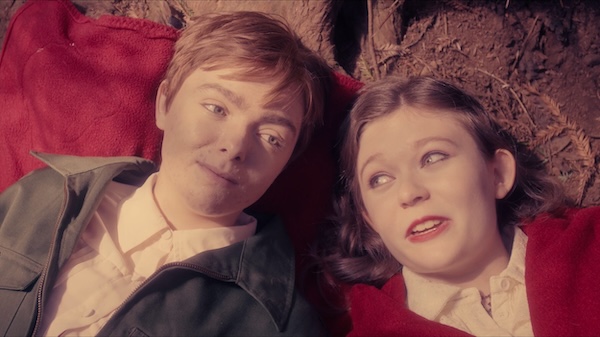
As Herbert starts recounting his childhood, the film shifts into extended flashbacks that show him as a teenager in Prague surrounded by his loving family. Lighting is used well in these early scenes, which are deliberately warm and sun-drenched, with trips to the circus, playful sibling moments, and his parents sharing joy and laughter. The film takes time to ground you in what was lost before showing you what happened next, making the contrast all the more devastating.

When Nazi occupation reaches Prague, everything shifts with brutal immediacy and the film palette turns grey and cold. Restrictions tighten around Jewish families, displacing them from their homes and their lives. Herbert and his family are eventually deported to Auschwitz, and from that point forward, the film becomes unflinching in its portrayal of what survival actually meant.
Upon arrival at the camp, Herbert is separated from most of his family in a process that’s both chaotic and systematically dehumanizing. He loses every family member one by one, deaths that aren’t always shown directly but are felt deeply throughout the film’s runtime. One particularly harrowing sequence shows Herbert assigned to forced labor that includes shaving the hair from those who have been murdered. The film cuts away before becoming graphic, but the emotional weight of what he’s being forced to do stays with you long after.
Herbert survives not through any kind of heroics but through a combination of resilience and cleverness that has him escaping back to Prague and the attic of a kind neighbor who offers protection. That protector becomes one of the most emotionally significant relationships of Herbert’s wartime experience, providing moments of hope inside unimaginable cruelty. The Optimist leaves the protector’s ultimate fate somewhat ambiguous, which contributes to the slightly rushed feeling of the ending.
When the war finally ends, Herbert is liberated physically but remains trapped emotionally by everything he’s witnessed and survived. The narrative returns to the present day, showing how those teenage experiences shaped his life and the decades of silence that followed. His optimism, the quality referenced in the film’s title, is revealed to be less about cheerfulness and more about defiance of Nazism. Even as a teenager in the camp, he clung to the belief that there would be a future worth surviving for, and that belief is what sustained him through the worst of humanity.
Back in the present timeline, Abbey slowly begins to share her own trauma as she witnesses Herbert opening up for the first time in six decades. Her storyline parallels Herbert’s in a different, more contemporary way. Her friendship with Sabrina, once bright and hopeful, fractured in a way that left Abbey carrying guilt and intense grief she doesn’t know how to process. Visually, the film presents her memories as bright and almost washed out in color, but equally grey when she loses Sabrina, as when Herbert loses his family at Auschwitz.
The final act of the film emphasizes the importance of legacy and breaking the silence. After keeping his story locked away for 60 years, Herbert makes the decision to start speaking to students about his experiences, sharing his testimony despite the emotional toll it clearly takes on him. The film closes with real testimonials from teenagers who were genuinely inspired by his story, reinforcing that his optimism and his choice to finally speak have created ripple effects that extend beyond his own healing.
Right now, this film feels painfully relevant. In a time marked by rising antisemitism and creeping political extremism, The Optimist feels like both a reminder and a warning about how quickly hatred can escalate, how deeply trauma endures across generations, and how survival is only the beginning of a lifelong reckoning with what you’ve witnessed and lost.
The only real weakness is in the ending’s pacing. Certain narrative threads feel underexplored, particularly the ultimate fate of Herbert’s protector in Prague and fuller clarity about how his mother managed to survive when the rest of his family didn’t. A few additional scenes providing emotional closure on these points could have strengthened the film’s conclusion without dragging out the runtime.
Still, The Optimist is a film about trauma and survival that reminds us the past doesn’t have to define our future and that seeking mental health support is never something to be ashamed of. It’s difficult to watch, deeply reflective, and painfully timely in ways that make it feel essential viewing.
Rating: 4/5 stars
Interested in learning more about The Optimist? Click to download the discussion guide below!