
Movie Review: The Testament of Ann Lee (2026)
The Testament of Ann Lee is not an easy watch, and it’s not meant to be. Directed by Mona Fastvold, the film leans into the unsettling contradictions of Ann Lee’s story, presenting her as both a progressive and a deeply flawed, almost cult-like figure. Read on for a spoiler-free review of The Testament of Ann Lee.
Screener was provided by movie studio however all thoughts and opinions my own. This article contains affiliate links.
The Testament of Ann Lee follows Ann Lee, the founder of the Shakers, as she rises from personal trauma and imprisonment to become the spiritual leader of a growing religious sect. What starts as a search for faith and purpose turns into something more intense, as Ann begins preaching celibacy and positioning herself as a maternal figure to her followers. As the group faces violent persecution from outsiders, the film switches between devotion and control, showing both the thrill of being a believer and the darker consequences of Ann’s views.
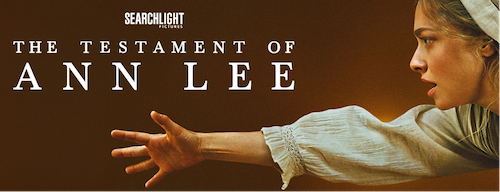
At first, Ann Lee (played by Amanda Seyfried) comes across as a spiritual pioneer, preaching gender equality and building a community centered on devotion, dance, and song. But as the story unfolds, that image becomes much more complicated. Her insistence that followers call her “Mother,” combined with her embrace of celibacy, begins to feel less like liberation and more like an attempt to control her followers. The film also suggests that many of her revelations stem from intense personal trauma, with her imprisonment and self-starvation leading to hallucinations that shape her beliefs.
The Testament of Ann Lee is a blend of biography, musical, and something close to horror. The Shaker hymns are reimagined as haunting, almost trance-like sequences, and the physicality of the worship (bodies thrashing all over a room, voices rising and singing) adds to the unease. That tension is heightened by the brutal treatment the Shakers face from outsiders who are prone to violence, especially when it comes to religion.
Seyfried is the film’s anchor, delivering a performance that is both mesmerizing and unsettling. She fully commits—singing, grieving, and physically embodying Ann’s emotional extremes. At one point, she’s leading bizarre worship, and then she’s breaking under the weight of loss, and frankly, Seyfried is impossible to look away from. The supporting cast, including Lewis Pullman and Christopher Abbott, adds similar energy to the film, as they portray characters caught between devotion, repression, and suffering.
Visually, the film mirrors its themes. The sets are stark and heavy, with dim interiors and muted tones that reflect a world devoid of warmth. Outside of the Shakers’ gatherings, there’s very little joy—just a sense of rigidity and emotional suppression that makes their meetings feel even more jarring to the surrounding community.
In the end, The Testament of Ann Lee doesn’t hand you a clear judgment. Instead, it asks you to sit with the discomfort—questioning faith, power, and the fine line between spiritual awakening, delusion and control.
The Testament of Ann Lee arrived on digital platforms including Amazon Prime Video, Apple TV, and Fandango at Home March 10 2026.
Other Film Reviews:


